
What Is a Supply Chain? Full Explanation and Examples
Most larger webshops and e-commerce companies, both within B2C and B2B, have a Supply Chain. Get the explanation and different perspectives here.
· 6 min read
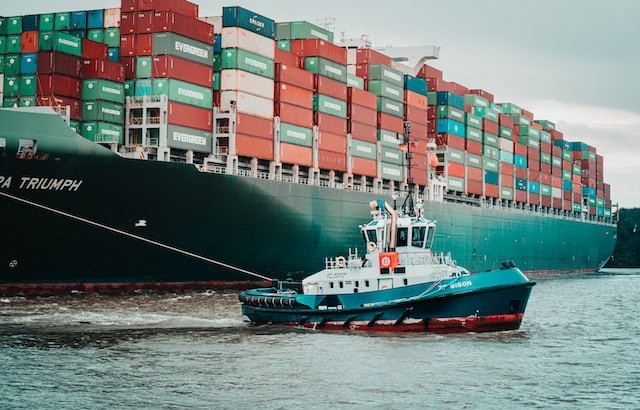
You have probably heard of the supply chain before. Maybe you already know a little about it, or maybe the term is completely new to you. Either way, here we dive into the topic and give you a precise definition of what a supply chain is, and what it is not.
Follow along through the article, or skip ahead and read more about integrations for your supply chain.
What is a supply chain?
A supply chain is the journey that a product’s components go through from the manufacturer, to assembly and on to the sale.
Take, for example, an exclusive leather bag. The bag consists of several different components such as leather, gold fittings and several other materials.
To make this bag and sell it to a consumer, all the components have to go through a supply chain. Perhaps the leather comes from Italy, is flown to Germany and then to Denmark to be sold. The bag’s fittings come from Asia, are flown to Germany and then to Denmark.
That is a supply chain. It is the route the materials or components take from the place of origin to the point of sale.
Who is part of a supply chain?
A supply chain typically involves several actors or stakeholders.
Here is a list of typical links in a supply chain:
-
Suppliers: The supplier’s role is often to source the raw materials and pass them on to the manufacturer.
-
Manufacturers: The manufacturer produces a particular part of, or perhaps the whole of, the product and sends it on.
-
Wholesalers: The wholesaler buys large quantities of a product from the manufacturer and sells it on to other links in the supply chain.
-
Distributors: The wholesaler often also acts as a distributor, and makes sure that the product reaches the right place.
-
Retailers: Now it is the retailer’s turn to resell the product to the consumer.
-
Consumers: The last link in a supply chain is typically the consumer. Depending on the product being shipped, this could be B2B customers, that is business customers, or private customers, as when you order a shirt online.
These links make up the typical elements of a supply chain. There may, however, be more links that apply in more complex supply chains, such as warehousing facilities and service providers. Connectify is a good example of a service provider that often helps optimise and automate our customers’ supply chains using integrations. You can read more about that here.
The difference between supply chain and value chain
Many people use the word “value chain” when they actually mean “supply chain”.
The difference between the two concepts is important. Let’s take a closer look at it.
What is a value chain?
A value chain is a series of actions or events that add value to a product from supplier to sale.
A supply chain is the points the raw materials pass through and come from, but the raw materials do not have value in themselves. It is other things that give the product its value. Here we are looking at the value chain.
Example of a value chain
Here are a couple of examples of value-creating actions that often take place over the course of a supply chain:
-
Assembly of a product: Every time a product is assembled by a person or a machine, it adds value to the product. A bit like when you buy vegetables in the supermarket. You can buy the raw ingredients at a really fair price, but if you go to a restaurant and have the food “assembled”, the raw ingredients are suddenly worth more. The same applies when you buy machines, industrial tools and other large B2B products.
-
Knowledge and innovation: A product is not just a product. You know that, of course. Sometimes a product is worth much more because it is innovative, designed by a visionary designer or the first of its kind.
-
Marketing: If a marketing team does it right, the value of a product can be increased. It takes the right communication to create the final perceived value of the product.
-
Sales: A product is worth what it can be sold for. Sometimes the sale takes place in an atmosphere where the experience of buying increases the perceived value. For example when a skilled sales consultant handles the customer in the right way and conveys the product’s value correctly to the consumer.
Make sure your supply chain is secure
With many actors, systems and stakeholders involved, a supply chain can quickly be disrupted.
Unforeseen events happen. Errors occur in the systems, and people make mistakes. Sometimes external factors can also disrupt a supply chain – for example, weather conditions can delay shipments, or a pandemic can occur… Not something we want again.
So what can you do to secure your supply chain?
Communication is key
Most problems in a supply chain can be solved with the right communication. So always make sure you know who to contact when something goes wrong in the value chain.
It cannot be made simpler than that.
IT stability
There are few links in a supply chain that do not involve IT systems in one way or another. Your ERP system is often the main actor, and when it has to be coordinated with all the other systems in your company, errors, challenges and delays that cost the company money can easily arise.
That is why it is important to make sure your IT systems work together instead of working against each other. This can be achieved through integrations and iPaaS solutions.
Integrations and efficiency
By integrating your IT systems, you can minimise human errors. You can automate manual and routine tasks in your supply chain by letting the systems handle them for you.
Most systems have built-in integrations, but to get the most out of the integrations, they often need to be adapted and tailored to your specific needs.
Typical systems that are integrated
- ERP – for example Dynamics 365 Business Central. See our article: Best ERP 2023
- PIM – to keep track of product data in the systems. Here we can mention Plytix and Struct.
- Ecommerce platform – to sell goods online to B2C or B2B. Integrations are available for Magento and Shopify.
And many more systems.
Conclusion:
Most product companies have a supply chain. It is simply a part of life, one is tempted to say.
A supply chain is a chain in which components move from one place to another and pass through several points of trade before they reach the end user.
In addition, the product goes through its own value chain, where value is added through actions such as marketing, sales and innovation.
A secure supply chain is characterised by good communication and stable IT.
Integrations can help secure a supply chain against human errors and optimise and automate different processes, making the product’s journey cheaper and more efficient. If you are more interested in supply chains and how integrations can optimise them, read on here.