Whether you are a small company that has just started exploring e-commerce, or an established business looking to upgrade your current setup, this guide will give you the insight you need to make informed decisions about integrating your B2C webshop with Business Central.
Why integrate a B2C webshop with Business Central?
The purpose of such an integration is to create an efficient and scalable e-commerce solution that can handle both business logic and data handling in real time.
In other words, you get the best of both worlds:
- A user-friendly, conversion-optimised webshop for your customers
- A robust ERP system to handle everything behind the scenes, such as order handling, inventory management, invoicing and accounting
By integrating these two systems, you can automate a wide range of processes and ensure that data is always up to date and synchronised across platforms.
Solutions and technologies
There are a great many different solutions when it comes to integrating a B2C webshop with Business Central. To make it easier, here is an overview of the four most popular options.
Shopify
Shopify is one of the best managed (meaning they take care of servers and so on) subscription-based B2C solutions on the market. That means you do not have to worry about the technical side yourself, since Shopify handles it. Shopify also has a very wide range of extension options and can easily be integrated with Business Central. So if you are looking for a user-friendly and scalable solution, Shopify is a strong candidate.
Read more: What is Shopify? Learn all about the platform · Shopify integration · Shopify Dynamics NAV
Magento (Adobe Commerce)
Magento, which is now part of Adobe Commerce, is an enterprise e-commerce solution that suits larger web projects, in both B2C and B2B.
With Magento you have greater scope to tailor your webshop exactly as you want it. It does require a little more technical skill than Shopify, but in return you get a solution that can be adapted to your specific needs.
Read more: Magento integration
WooCommerce
WooCommerce is a versatile, module-based e-commerce solution often used for small and medium-sized B2C projects.
If you already have a WordPress site, WooCommerce is an obvious option, as it can be integrated directly into your existing site. That makes it quick and straightforward to start selling your products online.
Read more: WooCommerce Integration · WooCommerce Dynamics 365 Business Central integration
Shopware
Shopware is a flexible and scalable open-source e-commerce platform that supports both B2C and B2B. One of the main advantages of Shopware is its API-first approach, which makes it straightforward to integrate with Business Central. So if integration is an important factor for you, Shopware is definitely worth considering.
Read more: Shopware integration
Whichever solution you choose, we can help you make it work with Business Central, so you get the most out of your webshop.
Integration technologies
Before you get started, there are a couple of key technologies worth knowing about. Let us look at some of the most important ones.
OData Connector
Microsoft’s REST API technology protocol OData is a considerable asset when it comes to straightforward integration with Dynamics 365 Business Central. By using this technology we can save both time and money in the integration process.
The OData Connector makes it possible to establish a smooth connection between your webshop and Business Central, so data can flow freely between the two systems.
API-first approach
Another important technology is the API-first approach. This approach ensures that no unnecessary third-party code is added to your ERP solution.
Instead you get two-way access to Dynamics 365 with both live and batch connection. That means your data is always synchronised and up to date, whether you work in real time or with scheduled updates.
With the API-first approach you can be confident that your integration is clean, efficient and does not put unnecessary load on your ERP system. It works like a well-oiled machine where all the parts work together.
So with the OData Connector and the API-first approach behind you, you are well equipped to create a seamless integration between your B2C webshop and Business Central.
Read more: What is the Business Central V2 API · Integration platform
Optimising the customer experience
One of the major benefits of integrating your B2C webshop with Business Central is that you can create a much better customer experience.
24/7 self-service
With an integration you can combine customer-specific data in real time with a smooth e-commerce experience.
That means your customers can:
- Place orders
- Make reorders
- Return goods
All without having to contact customer service or wait for a reply. They have access 24/7 and can handle it themselves.
Enrich product data with PIM
Another way to optimise the customer experience is by enriching your product data with a PIM system (Product Information Management).
With a PIM system you can:
- Enrich product data in several languages
- Add many types of media (images, videos, descriptions and so on)
That gives a far better content experience for your customers, but also for your resellers and sales team.
Imagine your customers being able to see detailed product descriptions, high-quality images from every angle and perhaps even a video showing the product in use. That is something that can genuinely boost sales and customer satisfaction.
In short: by integrating your B2C webshop with Business Central and enriching your product data with a PIM system, you can create a customer experience that is hard to beat.
Read more: Plytix integration
Practical advice and considerations
When you are about to integrate your B2C webshop with Business Central, there are some important things to consider.
Choose the right solution
First of all, you need to decide whether to go with an off-the-shelf solution or a custom solution.
Off-the-shelf solutions are often faster to implement and cheaper, but they can lack flexibility. Custom solutions take longer and cost more, but they can be tailored precisely to your needs.
Our advice? Think about your business goals. What do you need your webshop to be able to do? Based on that, you can choose the solution that fits best. And if you are in doubt, do get in touch.
We are happy to help you find the right path.
The next step is to consider which e-commerce platform best suits your business. Should it be Shopify, Magento, WooCommerce or something else entirely?
Each platform has its strengths and weaknesses, so it is about finding the one that best matches your needs.
Remember the costs
Finally, it is important to keep project scope, costs and maintenance in mind.
An integration between your webshop and your ERP system is not something you do just once. It often requires ongoing maintenance and updates.
So make sure you have a clear plan for how you will handle that, both practically and financially. It can save you a lot of trouble in the long run.
Examples of successful integrations
Let us look at a couple of concrete examples of how we have helped companies integrate their B2C webshops with Business Central.
Kaffekapslen.dk
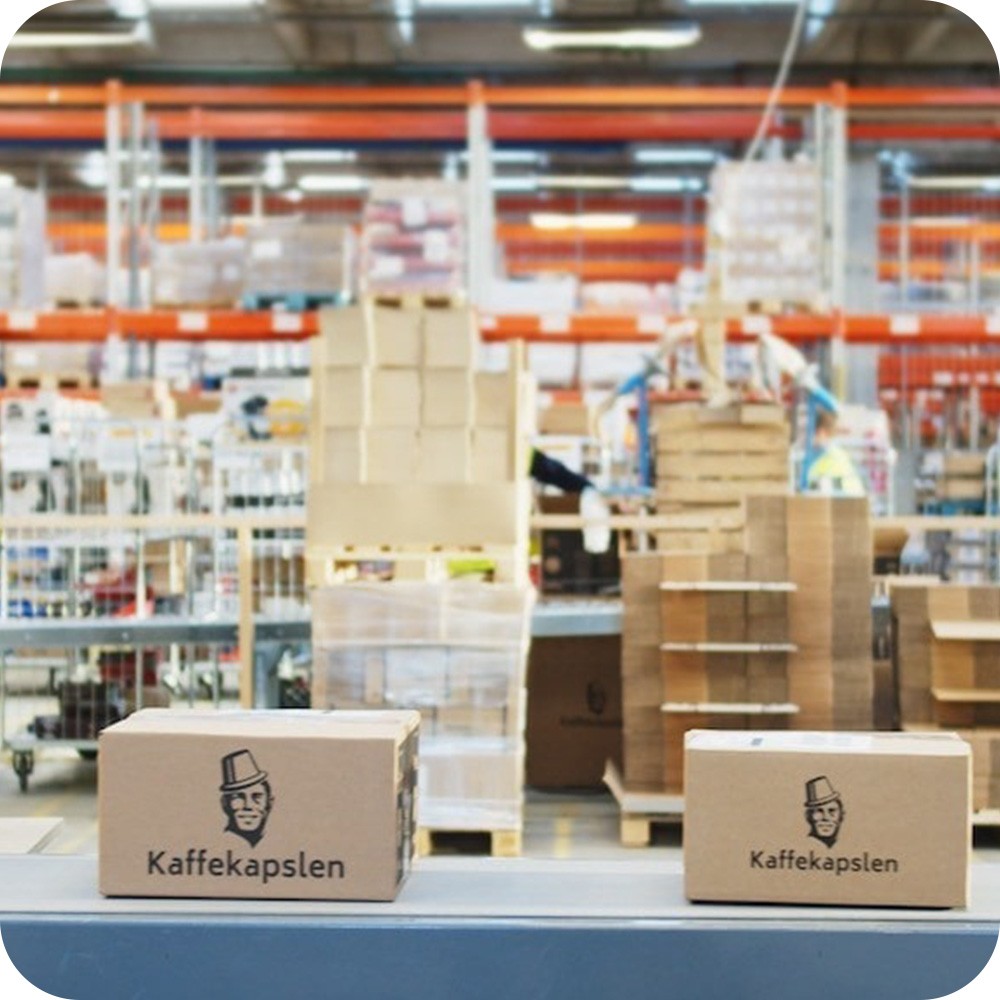
We have had the pleasure of working with Kaffekapslen, the largest retailer of coffee capsules in the Nordics and Germany.
The challenge was to make their Magento 2 e-commerce platform work with Microsoft Dynamics 365 Business Central.
And it worked.
The integration has given Kaffekapslen a combined overview of their stock levels and sales data. That has allowed them to optimise their business processes and reduce the need for manual updates. The result is a more efficient and streamlined business.
Shark Gaming Systems A/S
Another interesting project was with Shark Gaming, known to many for their gaming equipment. Here the task was to integrate their Adobe Commerce (Magento) platform with Dynamics 365 Business Central.
We ensured seamless data transfer between the systems, which has brought a number of benefits for Shark Gaming:
- Improved item creation
- Easier updating of master data
- More efficient order processing
In short, an integration that has made everyday work easier and more efficient for Shark Gaming.
So if you are considering integrating your B2C webshop with Business Central, you are in good company. And we are ready to help you achieve the same results as Kaffekapslen and Shark Gaming.
Integrating a B2C webshop with Business Central is an effective way to streamline your business processes, improve the customer experience and increase efficiency in your e-commerce business.
By choosing the right solution and implementing it correctly, you can achieve a seamless data flow between your webshop and your ERP system, which gives you a complete overview of your business and enables data-driven decisions.
Integrations are dynamic
Remember that integration is not a one-off task, but an ongoing process. Technology develops constantly, and your business needs can change over time.
That is why it is important to have a flexible solution and a reliable partner who can help you keep your integration up to date and effective.
Wherever you are on your e-commerce journey, integrating your B2C webshop with Business Central is a step in the right direction towards a more efficient, scalable and customer-oriented business.
Read more: Integrations